
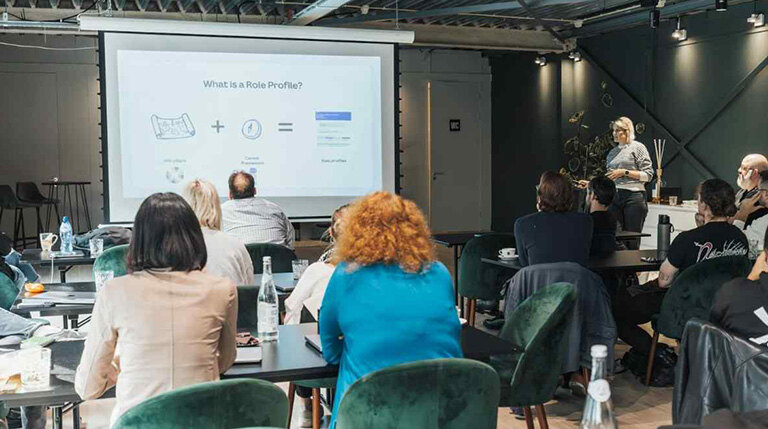
The Hidden Costs of Permanent Projector Installations in Multi-Use Spaces
When was the last time you used your conference room for just one type of meeting? If your place of operations is like many other environments, there’s a chance you conduct presentations in various locations.
Despite this reality, however, managers tend to default to permanent ceiling-mounted projectors as the “professional” solution. The assumption makes sense on paper because fixed installations look polished and keep equipment out of the way.
What doesn’t show up in the initial proposal are the costs that emerge after installation. Permanent systems lock rooms into specific layouts, require expensive specialist maintenance, and create underutilization when projectors sit idle.
So does permanent actually mean better, or would it be better to invest in projector carts or other mobile AV solutions?
Read on to find out.
What Is a Permanent Projector Installation?
A permanent projector installation is any AV setup that involves mounting a projector to the ceiling or wall using fixed hardware. In such an installation, electricians run dedicated power lines, while AV specialists calibrate the system for a specific screen position and room layout.
Once the setup is completed, the projector stays in a single location. As a result, moving it to another room or adjusting the configuration means restarting the installation from scratch.
Portable projectors (like projector carts on wheels) offer a different approach. In multi-use spaces, technology hurdles disappear thanks to the mobility and portability of these setups.
The Hidden Costs Schools and Organizations Often Overlook
On the surface, the quote for a permanent installation includes labor costs and the equipment to be installed (unless you already have mountable projectors). What the estimates won’t show are these ongoing expenses and limitations.
Installation and Labor Expenses Plus Downtime
Mounting a projector requires paying for multiple specialists:
- Electricians install dedicated circuits to avoid overloading existing lines.
- AV technicians calibrate throw distance and align the image.
- Facilities teams coordinate the work around room schedules.
Worse yet, the room sits unusable during installation. For this reason, you may have to relocate classes or meetings for several days.
Inflexible Room Layouts
Ceiling mounts determine where screens can hang and where furniture can sit. Rearranging a space to accommodate different group sizes or teaching styles becomes impossible without the projector beam hitting walls or people’s heads.
Difficult Maintenance Access
Replacing bulbs or fixing technical problems requires ladders, lift equipment, and technicians comfortable working at ceiling height. If you’re running a school or office, expect to pay premium rates for these service calls compared to flexible presentation equipment that sits at table level.
Technology Replacement Costs
Upgrading to a newer projector model five years later means repeating the entire installation process. The mounting brackets rarely fit newer equipment dimensions.
Single-Room Limitation
A fixed off office or classroom projector setup equals limitations. A projector permanently installed in one conference room can’t serve the training room down the hall, even when that conference room sits empty most afternoons.
Why Multi-Use Spaces Need Flexible Technology
Your facility should be able to maintain presentation capabilities without locking technology into fixed rooms and spaces.
Here’s why your technology needs to be agile instead of permanent.
- Different activities demand different configurations: There’s no one-size-fits all when it comes to the multi-use spaces technology. For instance, a training session for 40 people needs the projector positioned differently than a board meeting for eight.
- Group sizes change constantly: Permanent installations optimize viewing for one audience size, making every other configuration a compromise.
- Equipment needs to follow the activity: Built-in systems tie expensive technology to specific rooms regardless of where the actual work happens.
Projector carts address these limitations by making presentation equipment mobile rather than architectural.
How Projector Carts Solve These Challenges
Mobile presentation equipment removes the constraints that permanent installations create.
With a portable projector cart on wheels, your organization will have the adaptability that multi-use spaces require without forcing compromises on functionality or professional appearance.
Here are some of the tangible ways portable projector carts address fixed setup limitations.
Portability Between Rooms
One portable projector can be used for multiple spaces instead of purchasing separate systems for each location. The equipment moves wherever presentations happen, whether that’s a conference room, training space, or community event.
No Installation Required
Setup takes minutes rather than days. There’s no mounting hardware, no dedicated electrical work, and no room downtime during installation.
Shared Use Across Teams
Multiple departments will be able to access the same projector carts rather than competing for permanently equipped rooms. For example, if nobody in marketing is using your project, someone from your sales department can use it for the next ROI presentation.
Compatibility
Whether you’re using Epson, Sony, or BenQ projectors, portable projector carts like the ProVision Projector Cart are easy to match with existing tech. There’s no need for specialized cables or adapters, thanks to the cart’s multiple adapter ports.
Example: The ProVision Projector Cart in Real-World Use
The ProVision Projector Cart is one of the most sought-after mobile AV solutions for its mobility and durability. Because it’s a standalone AV setup, it’s in use in numerous industries and environments, like schools, training centers, and offices.
Here’s an example of how it’s used in manufacturing.
A manufacturing facility runs safety training across three shifts in different building sections. The cart rolls from the warehouse floor for the first shift to the assembly area for the second shift to the packaging department for the third shift.
Each location has different layouts and group sizes, but the same equipment serves all three sessions. When training ends, the cart stores in a locked office rather than occupying valuable production floor space.
How To Decide Between Permanent Installation and a Projector Cart
Consider these when you’re deciding between fixed setups and flexible presentation equipment:
- Room usage patterns: Spaces used for one purpose most of the time justify permanent installations. Rooms hosting different activities throughout the week need flexible equipment.
- Budget limitations: Installation costs often exceed equipment costs. Mobile solutions eliminate specialist labor and room downtime.
- Number of presentation spaces: Equipping five rooms permanently costs more than sharing two projector carts between those locations.
- Technology replacement cycles: Permanent mounts become obsolete when projector dimensions change. Mobile equipment upgrades without reinstallation.
- Storage availability: Carts require secure storage space when not in use.
Rethinking AV for Modern, Multi-Use Spaces
Permanent projector installations hide costs that only surface after the drilling stops. If you have multi-purpose spaces, you need presentation equipment that adapts rather than restricts.
Are you in need of mobile AV solutions that move with your operations. Reach out for a free quote today.
